
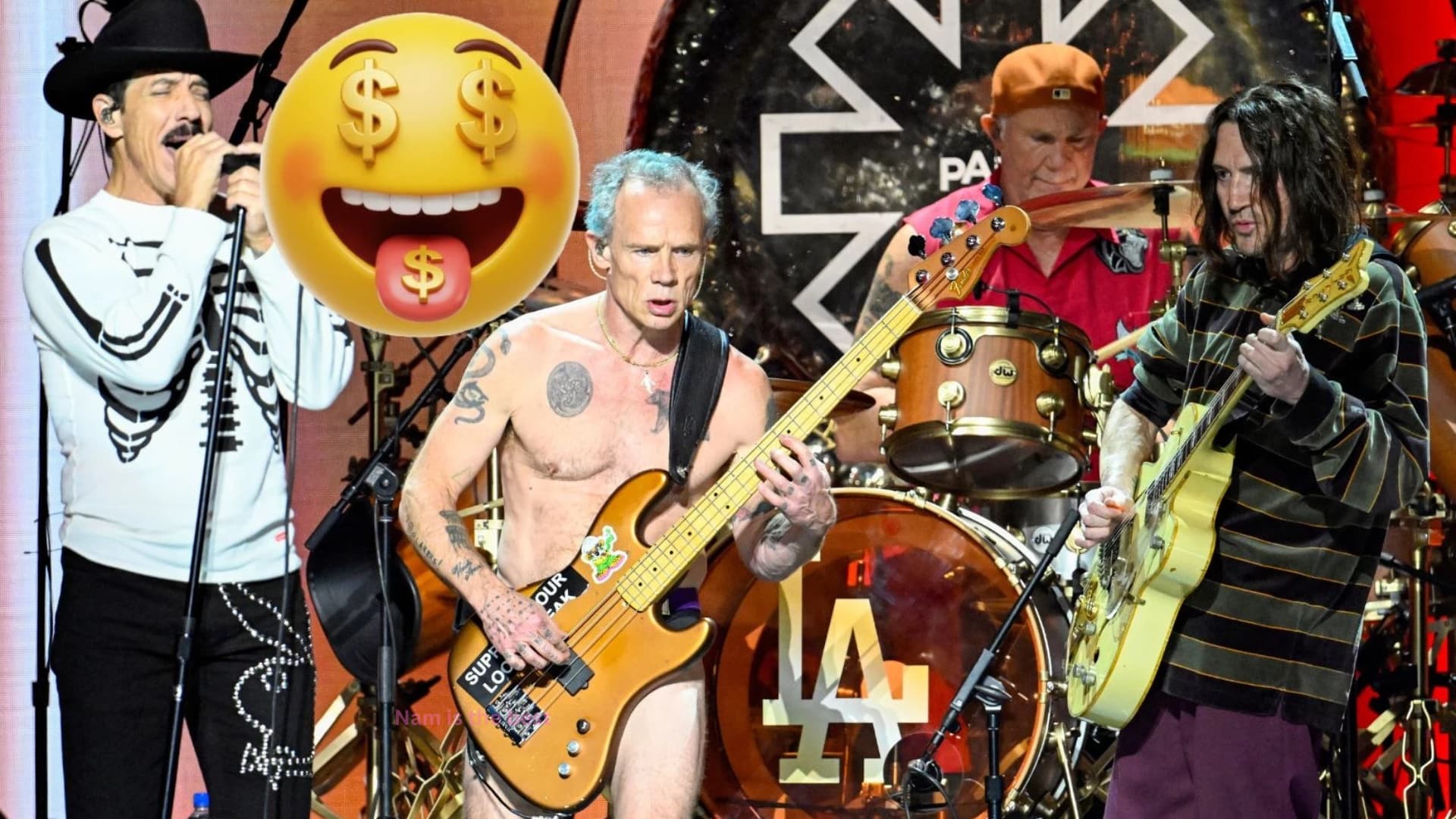
Most people think of Red Hot Chili Peppers as one of the biggest rock bands of all time.
The music. The live shows. The cultural impact.
But behind the success lies one of the most valuable music rights strategies the industry has seen.
Over the past five years, the band has completed two separate catalogue transactions reportedly worth more than $450 million combined. In 2021, they sold their publishing catalogue to Hipgnosis in a deal reported to be worth around $140 million to $150 million. Then, in 2026, Warner Music Group acquired their recorded music catalogue for a reported price of more than $300 million.
These were not duplicate sales of the same music. They involved two different sets of rights, each representing a distinct financial asset.
For songwriters, artists, producers, investors and rights holders, the Red Hot Chili Peppers have become a powerful example of how music ownership can create extraordinary long term value.
One Catalogue. Two Valuable Assets.
One of the biggest misconceptions in the music industry is that a song represents a single asset.
In reality, every commercially released recording is typically built on two separate copyrights.
The first is the publishing copyright, which protects the underlying composition, including the melody and lyrics. This copyright generates income through performance royalties, mechanical royalties, synchronisation licensing and other publishing revenue.
The second is the master recording copyright, which protects the actual recorded performance that listeners hear on streaming services, radio, vinyl, CDs and digital downloads.
Because these rights are separate, they can be bought, sold and managed independently.
That distinction explains how Red Hot Chili Peppers were able to complete two landmark transactions involving the same body of work.
Building Value Over Four Decades
Catalogue value is not created overnight.
Red Hot Chili Peppers have spent more than forty years building one of the most successful catalogues in rock music. Songs such as “Under the Bridge”, “Give It Away”, “Californication”, “Scar Tissue”, “Otherside” and “Snow (Hey Oh)” continue attracting millions of listeners around the world decades after their original release.
Their music has become part of popular culture, appearing in films, television, advertising, playlists, sporting events and social media.
Unlike many entertainment assets that lose value over time, iconic songs often continue generating revenue year after year.
That consistency is one of the reasons institutional investors are willing to pay substantial sums for proven catalogues.
Why Buyers Are Willing to Pay Hundreds of Millions
Music rights have become one of the fastest growing alternative asset classes.
Streaming has fundamentally changed how catalogues generate income. Instead of relying on physical album sales that peak shortly after release, successful catalogues now earn recurring revenue from streaming platforms, radio broadcasts, synchronisation licences, public performances and physical formats.
For investors, that creates something extremely valuable.
Predictable cash flow.
The Red Hot Chili Peppers’ catalogue has demonstrated commercial resilience across multiple decades, making future earnings easier to forecast than many newer catalogues that have yet to stand the test of time.
Buyers are not simply purchasing songs.
They are investing in long term intellectual property that continues producing income across global markets.
The Biggest Shift in Music Isn’t Streaming
Streaming transformed how audiences consume music.
Ownership transformed how the industry values it.
Twenty years ago, catalogue acquisitions of this size were relatively rare. Today, major record companies, specialist music funds, private equity firms and institutional investors compete for iconic music rights because they recognise their long term earning potential.
Warner Music Group’s acquisition of the Red Hot Chili Peppers’ recorded music catalogue, completed through its catalogue investment partnership with Bain Capital, reflects how financial institutions increasingly view music as a durable investment alongside other income producing assets.
The music business has evolved far beyond selling records.
Today, ownership itself has become one of the industry’s most valuable commodities.
Great Catalogues Never Really Stop Working
One of the defining characteristics of a legendary catalogue is longevity.
Red Hot Chili Peppers no longer need a new hit single to remain commercially relevant.
Their catalogue continues reaching new audiences through streaming playlists, catalogue recommendations, film and television placements, user generated content and global radio.
Every new generation discovers classic music differently.
For investors, that ongoing discovery creates opportunities for revenue that can continue for decades after a song’s original release.
This is one of the key reasons why timeless catalogues command premium valuations.
Valuation Is About More Than Royalty Income
Many people assume catalogue valuation is simply based on annual royalty earnings.
The reality is far more complex.
Sophisticated buyers evaluate ownership certainty, copyright registrations, royalty collection efficiency, licensing history, international revenue sources, audience demographics, contractual obligations, legal risks and future commercial opportunities.
A well managed catalogue with clear ownership and strong global administration can command a significantly higher valuation than one producing similar royalty income but lacking robust rights management.
The value of music is shaped not only by popularity, but also by the quality of the underlying intellectual property.
Every Rights Holder Can Learn From This
Few artists will ever complete transactions worth hundreds of millions of dollars.
That is not the lesson.
The real lesson is that every catalogue has value, and that value grows when ownership is protected, copyrights are properly registered and rights are actively managed throughout a catalogue’s life.
Whether a creator owns ten songs or ten thousand, every work represents intellectual property with the potential to generate income for decades.
Understanding the distinction between publishing rights and master rights is no longer just the responsibility of lawyers and record labels.
It has become essential knowledge for anyone building a career in music.
The Future of Music Wealth Is Ownership
The Red Hot Chili Peppers have built one of the most valuable catalogues in modern rock, but their greatest financial success did not come from selling records.
It came from owning the rights behind them.
Their publishing transaction in 2021, followed by the sale of their recorded music catalogue in 2026, demonstrates how different layers of music ownership can be monetised over time.
As the global market for music rights continues to mature, more creators are beginning to view their catalogues not simply as collections of songs, but as portfolios of intellectual property capable of creating long term wealth.
The next generation of successful artists may still be remembered for the music they create.
But they are increasingly likely to build their greatest wealth through the rights they choose to keep.